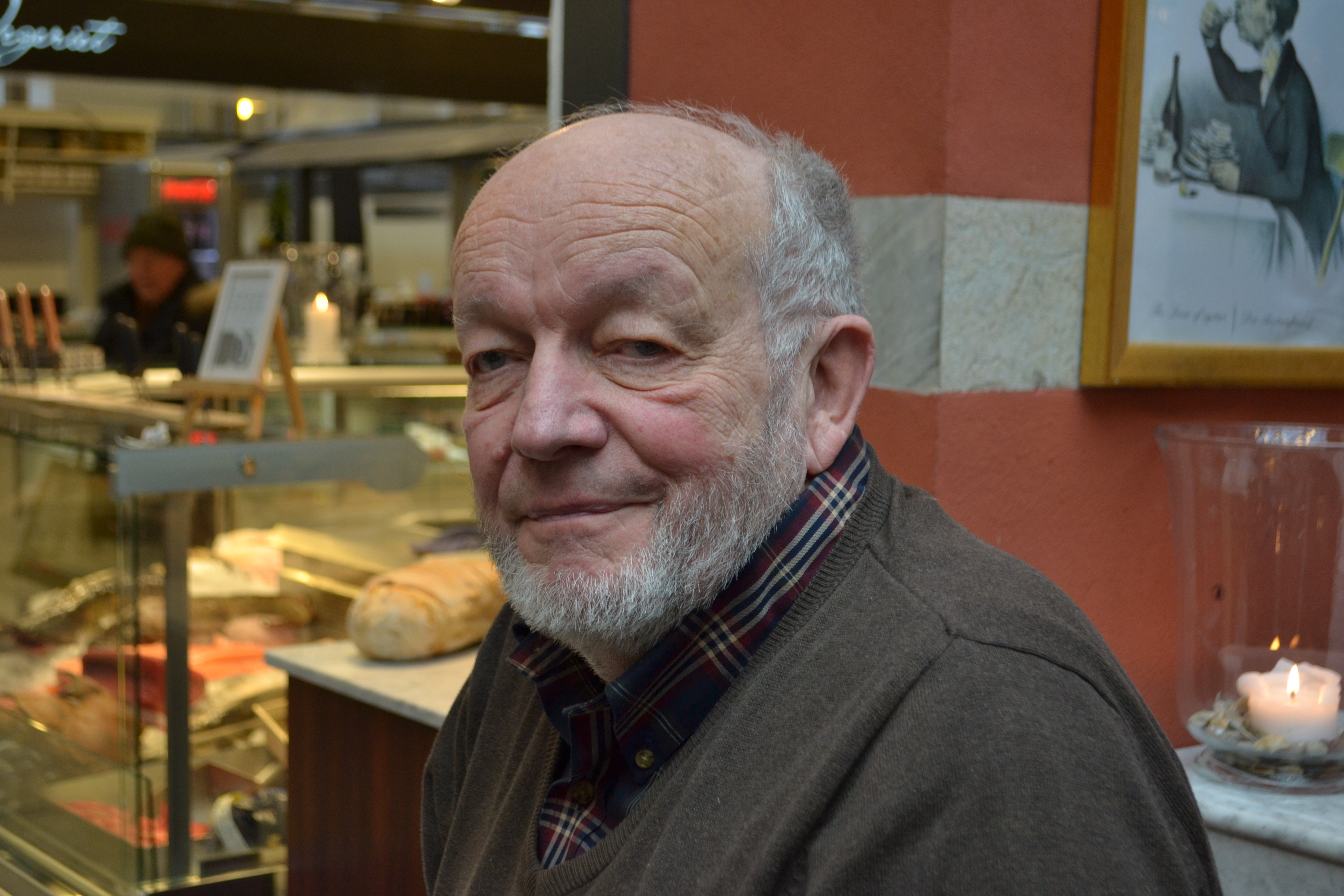
The Videograph at Röda Kvarn in Stockholm
Dennis Magnusson
The blog discusses a forgotten chapter in Swedish film history, namely Videographs: places which provided a new way of accessing movies.

Scandia BLOG contains academic blog posts about new history research and popular history posts, as well as review of exhibitions and films with historical content. The posts highlight a particular aspect that may not have been covered in a journal article, describe the work behind published research, or introduce new areas of research.
Dennis Magnusson
The blog discusses a forgotten chapter in Swedish film history, namely Videographs: places which provided a new way of accessing movies.

Louise Bundgaard, Kamilla Matthiassen, Fiona G. Otten, Anne Katrine H. Pedersen & Bo Poulsen, Aalborg University
In this blog, the authors discuss the effects of the West Indies Hurricane of 1916, including the sale of the Danish West Indies to USA in 1917 and how the latter was instrumental to the US involvement in World War I.
Orkanen 9-10 Oktober 1916. Dansk Vestindisk Selskab.
Read More Read more about A Hurricane in the Game of Foreign Policy: Disaster Management and the Sale of the Danish West Indies to the USACamilla Olofsson Båatas, central handläggare för samiska frågor, Gaskeuniversiteete/Mittuniversitetet
Sven Olofsson, universitetslektor, Gaskeuniversiteete/Mittuniversitetet
Håkon Hermanstrand, postdoktor, Noerhte universiteete/Nord universitet
This post regards a meeting at Mittuniversitet to discuss South Sámi history and archaeology in January 2025.
Read More Read more about New information about South Sámi history indicates that we need to break boundariesIt might be the thing that I really can remember: the box containing the missionary exhibits. Of all the brown, acid-free archival boxes...
Daniel Henschen, Roskilde University, writes about how exhibitions of missionary activities can function as mediators of the world outside of Europe.

What can experiences from involvment as a member of the Swedish Truth and Reconciliation Commission tell us about how ‘big’ and ‘small’ histories are treated?
Klas-Göran Karlsson, Professor Emeritus in History at Lund University, writes about his experience with Truth and Reconciliation Commissions in Sweden.
Read More Read more about Truth and Reconciliation CommissionsHow can ecclesiastical legal sources benefit studies in social, family and gender history?
Per Ingeman, Professor Emeritus at Aarhus University, discusses how the church records that he examined in his recent article on ecclesiastical law in Scandia can be used to give different perspectives. He shows how the same source can benefit studies in social, family and gender history.

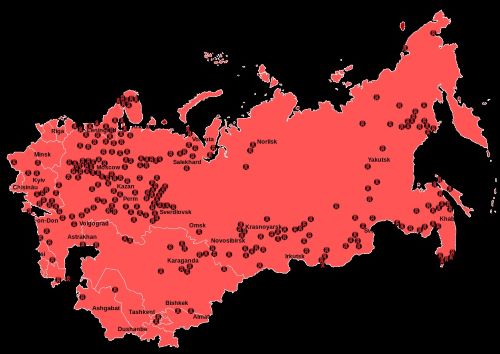
In this blog post, Lovisa Andén, University of Tromsø, reflects on her research into testimonies written by former Gulag prisoners.

Map of the Soviet-era Gulag Concentration Camps by Antonu (CC-BY-SA 3.0)
Read More Read more about Can we trust testimonial literature?Information about an upcoming conference in the conference series, Digital History in Sweden, at Linnaeus University.
The workshop, Human rights in global and colonial contexts: Scandinavia and beyond, will be held at Lund University on June 11-12, 2024.
Read More Read more about Human rights in global and colonial contexts: Scandinavia and beyond. 11 – 12 June 2024. Department of History, Lund UniversityIn this blog post, Magnus Bohman (Umeå University) reflects on his research project and discusses his article in Scandia 2023:2.

Institutet för studier i Malmös historia (IMH) and Institute for Urban Research (IUR) warmly welcome you to the conference, Urban Transformations and Urban Histories, which will be held in Malmö, 15-17 May 2024.
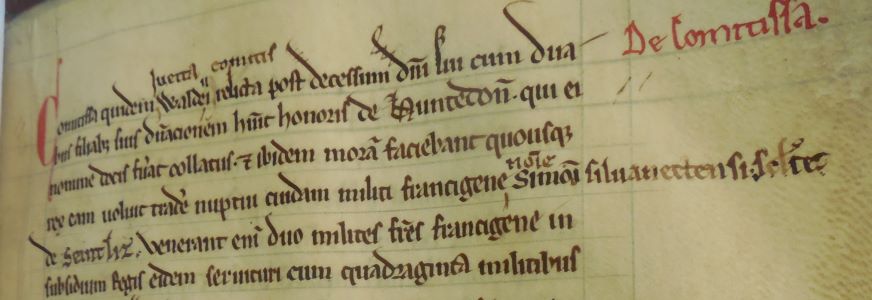
Read More Read more about Urban Transformations and Urban HistoriesIn this blogpost, Elizabeth Dachowski and M. Wendy Hennequin reveal how their discovery of Countess Judith of Huntington led to an exploration of how lived religion provides new perspectives on the path of Judith's husband, Earl Waltheof, towards sainthood.

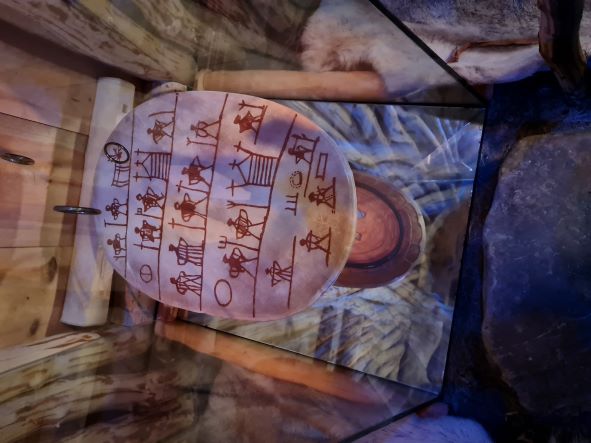
In this blogpost, Jorun Jernsletten discusses the Sami noaidi Anders Poulsen and different ways of approaching lived religion.

In this blogpost, Sofia Lahti uses reliquaries to discuss the parallels between modern meme-culture and medieval art.
Read More Read more about Chatty reliquaries and engaged emotionsIn this blog post, Pelle Oliver Larsen discusses how women’s perceived scholarly competence and position in 19th century Danish society affected their prospects of studying to be physicians.
Read More Read more about Female (medical) science, child care, and moralsIn this blog post, Fredrik Alvén (Malmö University), Klas-Göran Karlsson (Lund University), and Marianne Sjöland (Malmö University) reflect on historical culture and the place of the Holocaust in history teaching.
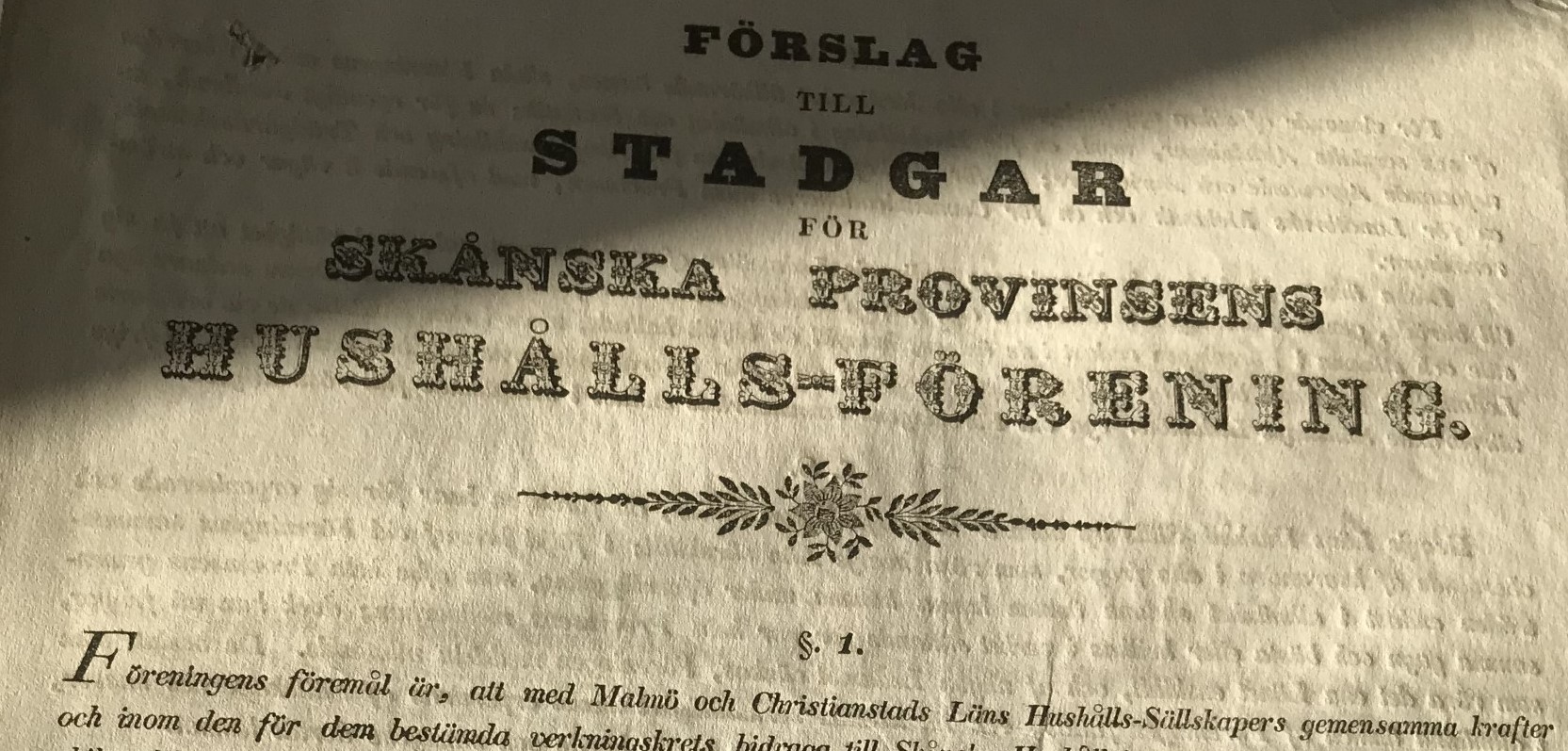
Read More Read more about The Holocaust as scholarly and civic history - a tense relationshipIn this blog post, Inger Lyngdrup Nørgård, University of Southern Denmark, reflects on her research about poverty and the worthiness of the poor in the early 19th century.
Read More Read more about The Male Provider: from an Exclusive to an Inclusive Concept in Poor and Social PoliciesIn his post on Scandia's blog, Jonas Liliequist (Umeå University) discusses his research related to comparative gender and cultural-historical studies of invectives and defamation.
Read More Read more about Comparative analyses of sexual allusions as political weapons across time and culture – a new productive field of research?In his post on Scandia's blog, Olle Jansson, Uppsala University, discusses his research about the Swedish medical profession and reactions to immigration in the mid-20th century.
Read More Read more about The national boundaries of the Swedish medical professionThe autumn 2021 issue of Scandia has now been sent to our subscribers.
Read More Read more about Distribution of the autumn issueIn his post on Scandia's blogg, Bertel Nygaard, Aarhus University, discusses his research on the effect of Alice Babs on popular culture and the search for local counterparts in Denmark.
Read More Read more about Time of the 'Babses': About Idols and the search for their local counterparts in the 1940sThree of the authors who have written articles in the autumn issue of Scandia have written blog-posts about their research. They will be posted in December and January. Keep an eye out!
Read More Read more about Upcoming posts on Scandia's blogThe distribution of Scandia 2021:2 has unfortunately been delayed due to a late delivery from the printing house.
Read More Read more about Delayed distribution of the autumn issueCall for papers for a conference on Swedish political history from 1500–1920.
Read More Read more about Call for papers (Swedish only)In his post on Scandia's blogg, Alexander Isacsson, Örebro University, discusses his research about dynastic centralization in the 16th century.
Read More Read more about Dynastic centralization in Sweden in the 1560s (only in Swedish)Warning! Our website has been illegally copied by an outside party and the fraudulent website is included in a spam-email that is still circulating, with researchers as the primary target. The spam-email falsely claims to be from a member of our editorial board. The fraudulent domain ends with ".org". Our IT-department has been notified and is working on a solution.
We would like to emphasize that Scandia has nothing to do with either the spam e-mail or the fake website.
/The Editorial Board for Scandia
Read More Read more about Warning: Fraudulent website and email claiming to be from Scandia: tidskrift för historisk forskningCall for Papers for Scandia Thematic Issue 2022 on Religion in Everyday Life: Lived Religion in the North from the Iron Age to Enlightenment. EXTENDED DEADLINE!
Read More Read more about Call for Papers. Scandia Thematic Issue 2022: Religion in Everyday Life - Extended deadlineScandia's editorial board has been informed that our website has been illegally copied by an outside party and that the fraudulent website is included in a spam-email that has been circulating. Our IT-department has been notified.
Read More Read more about Fraudulent website claiming to be ScandiaScandia has received welcome news from the Swedish Research Council that they have now decided to financially support the continued publication of Scandia. This financing, together with the support from subscriptions and other sources, means that the publication of Scandia is now secured for the coming three years. We would also like to thank all of the historians in Sweden and beyond who have shown an enormous amount of support for us since the autumn. This has meant a great deal to Scandia's editorial board and has shown that our subscribers are an incredibly important part of our work. The large number of new subscriptions have provided us with an important financial contribution; however, they are also absolutely essential in order to show our funders that Scandia is important to historians. We hope therefore for continued support through subscriptions.
/The Editorial Board
Welcome to the Conference
SUFFRAGE NOW!
International Conference on Gender and Democracy
Stockholm University 13-14 August 2021.
The conference will be a hybrid event with both physical and digital participation. If the conference has to be moved entirely online (due to pandemic restrictions), this will be made known before the summer.
Abstracts accepted until March 15, 2021.
Registration for online participation without giving a paper can be done until August.
Online conference participation is free of charge.
For more information:
https://www.historia.su.se/om-oss/evenemang/2.63095

In this post for Scandia's blog, Thom Axelsson discusses his research on juvenile delinquency and its causes (in Swedish).
Read More Read more about Juvenile delinquency and its causesCall for Papers for Scandia Thematic Issue 2022 on Religion in Everyday Life: Lived Religion in the North from the Iron Age to Enlightenment
Read More Read more about Call for Papers. Scandia Thematic Issue 2022: Religion in Everyday LifeStarting on January 1, 2021, Professory Wiebke Kolbe will replace Svante Norrhem as the Chief Editor of Scandia. In this post, she introduces herself, her research, and her hopes for the future of Scandia.
Read More Read more about Introducing Scandia's new chief editorThe distribution of Scandia 2020:2 has unfortunately been delayed due to illness.
Read More Read more about Delayed distribution of the autumn issueAfter the Swedish Research Council announcement, Scandia has been discussed and referred to in the media. Links to these articles and opinion pieces can be found here.
Read More Read more about Scandia in the mediaFörra veckan beslutade Vetenskapsrådet (VR) om stöd för vetenskapliga tidskrifter för de kommande tre åren. I en tid av vikande upplagor för tryckta tidningar har tidskriftsstödet på senare år blivit Scandias enskilt viktigaste inkomstkälla. Pengarna har hjälpt till att bekosta redaktionellt arbete, produktion och distribution av en tidskrift som i mer än 90 år varit en viktig röst inom svensk historievetenskap.
Den här gången blev det annorlunda...

av Sasja Emilie Mathiasen Stopa, postdoc i systematisk teologi, Aarhus Universitet
Den nordiske kvinde tager magten for tiden. Norge og Island har haft kvindelige statsministre siden henholdsvis 2013 og 2017. I Danmark blev Mette Frederiksen i 2019 valgt som den anden kvindelige statsminister nogensinde. Og i Finland er Sanna Mirella Marin netop blevet premierminister i en regeringskoalition, hvor alle fem partiledere er kvinder. Dermed regeres fire ud af fem nordiske lande i øjeblikket af kvinder. Men hvorfor er det netop i Norden, at kvinder har opnået den højeste grad af ligestilling og nu ligefrem er i stand til at tilkæmpe sig statsmagten? Hvilke forestillinger om kvindens rolle i samfundet har banet vejen for den nuværende situation, hvor de nordiske kvinder hersker?
Read More Read more about BLOGG Hvordan blev den nordiske kvinde hersker?
av Rebecka Dahlkvist, Göteborgs universitet
I internationell forskning karaktäriseras det svenska samhället som ett av världens mest icke-traditionella och sekulära. Färsk statistik visar hur trenden som präglat andra halvan av 1900-talet fortsätter: allt fler väljer bort kyrklig begravning till förmån för alternativa ritualer eller inga ritualer alls. Artikeln i det senaste numret av tidskriften Scandia (2019:2) är tillkommen i ett möte mellan en student och en professor i egenskap av handledare. Professorns ingångspunkt var vetenskaplig: varför finns inga prosekulära organisationer med i historien om den det svenska samhällets moderna historia, och i synnerhet statskyrkans samhälleliga marginalisering? Studentens ingångspunkt var kulturkritisk och existentiell: vilka former står till buds för den senmoderna människan att gestalta sitt liv genom, och kan de historiseras?
Read More Read more about Om ”Folkhemmets prosekulära aktörer”
For the past month, the blog series DigHist – Perspectives on Digital History has explored numerous facets of the ontology of the digital, in particular related to the study of the past.[1] The blog posts have discussed a number of issues related to communication, research techniques, new ways of thinking, and the creation of new tools. The following blog will continue the focus on sources and the digital while also taking into account the communication and use of history. Using a number of examples of digitization for cultural heritage research, education, and public consumption, it will briefly explore questions of ontology; the consequences that digital technology has...
Read More Read more about BLOG Digitizing the Past for Cultural Heritage Research, Education, and Public Consumption
Norse World (uu.se/norseworld) is a digital resource created by The Norse Perception of the World project for researchers, students and the public to explore the spatiality of medieval vernacular literature from Sweden and Denmark. The project, consisting of Principal Investigator Jonathan Adams and co-Investigators Agnieszka Backman, Alexandra Petrulevich and Simon Skovgaard Boeck, is funded by Riksbankens Jubileumsfond Infrastructure for three years, 2017-2020.
The starting point for the project is looking at East Norse (Old Swedish and Old Danish) literature as a mine of information on how foreign lands were visualized in the Middle Ages: What places were written about and where? Are some places more...
Read More Read more about BLOG Norse World: A digital humanities resource for spatial analysis of medieval texts
The Periegesis Hellados (Description of Greece) is the work of a certain Pausanias of Magnesia, a writer of the 2nd century CE. Unlike contemporary tourist guides or other late antique narratives of pilgrimage, Pausanias shows little interest in describing the natural environs or infrastructure (roads, bridges, etc.) through and over which he undertakes his journey. Instead, his ten-book-long narrative reveals a highly selective and idiosyncratic description of Greece based on its human footprint.
Pausanias famously begins his description with no introduction: we aren’t told who he is, what this text is, or why he’s writing it. About two thirds of the way through his first book, however, he mentions in passing what seems to be his working method. He has set out to record the man-made monuments in and human history of the landscape:
“Such in my opinion are the most famous legends (logoi) and sights (theorêmata) among the Athenians, and from the beginning my narrative has picked out of much material the things that deserve to be recorded.” (Pausanias, Description of Greece 1.39.3).
Sights (theorêmata in Greek) is etymologically connected to theôria, a word deriving from the combination of thea (view) and hôran (to see). Theôria has this double sense of looking at...
Read More Read more about BLOG Contemplating a Digital Periegesis
With the increase of digitized historical texts, databases with user-friendly search functions, and digital projects (or TRCs, Thematic Research Collections) with a mixture of research tools and a variety of archival material, the possibilities for historians have multiplied. That so many medieval texts have been transferred into digital formats in the past few years is an obvious advantage for medieval studies. Everyone is grateful that we can now find critical editions and high-resolution manuscript images straight from our own computer screens, and do the time-consuming research right at home, instead of...
Read More Read more about BLOG Virtues, Vices, and Vectors: Digital Tools and the Study of Medieval Sermons
How will digitalization influence historical research in the future? Will it lead to further specialization and compartmentalization, or to more cooperation and communication between disciplines? There are different views on what the future will bring in this regard. Some believe that the digital turn favours quantitatively oriented research, others that the same turn will lead to a convergence of research methods (quantitative and qualitative) and bring about collaboration across disciplines. I believe that general speculations about future trends in research are shaky, as these trends are not only shaped by technology, but also by things such as institutional preconditions and theoretical...
Read More Read more about BLOG Let’s make the ‘digital turn’ a ‘narrative turn’! On the gap between two history disciplines and how to bridge it
Let me begin this brief reflection by emphasising that I’m not really a ‘digital historian’ in any meaningful sense of that word, and even as a ‘digital humanist’ I would only qualify by the biggest-tent-possible kind of definition.[i] However, for many years I have had a strong interest in the countless questions arising at the intersection of ‘the digital’ on the one hand and academic history in theory and practice on the other. Indeed, during the first half of this decade, I followed the developments and debates in the emerging field of DH – or at least the English-speaking parts of it – quite closely and spent much time thinking about how all of this related to my work as a historian and especially to the role of history...
Read More Read more about BLOG Historians and the new (digital) media landscape

In May 2018, a workshop was held at Malmö University on the subject of Digital History, bringing together Scandinavian scholars from a number of history disciplines. The purpose of the workshop was to discuss ontologies of digital history from different perspectives and can be seen as a first step taken in order to engage critically with this growing field and to create an inter-Scandinavian network. These scholars are active within, for instance, digital pedagogy, public history...
Read More Read more about BLOG DigHist – Perspectives on Digital History. An academic blog series: Introduction
av Andrés Brink Pinto
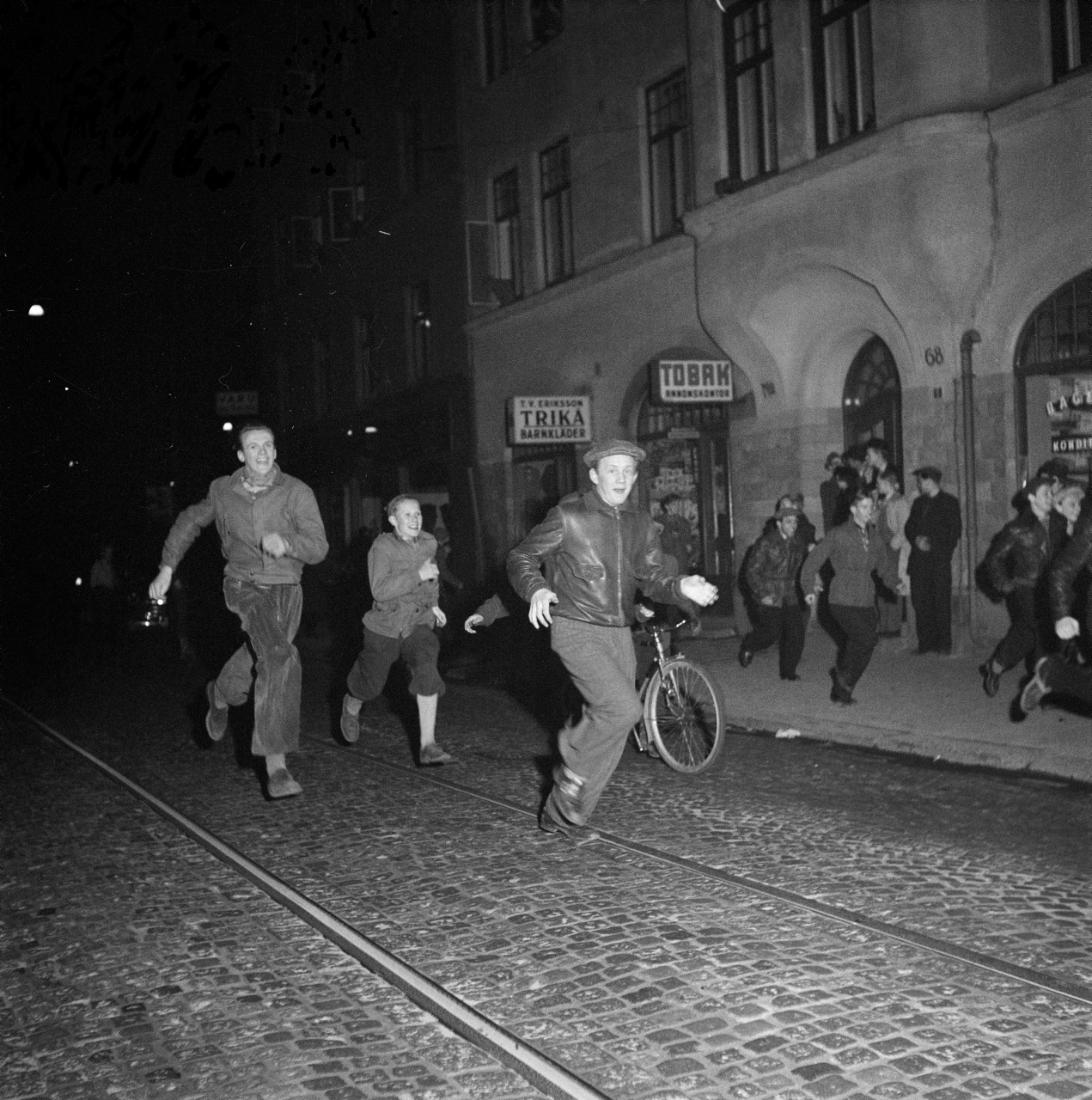
Den här artikeln är tillkommen inom ramen för vårt projekt Ungdomsupplopp och ungdomspolitik 1948–1989 - Från Götgatasbacken till kravallerna i Kungsan, där vi undersöker en rad dramatiska händelser, som av sin samtid förstods som ungdomsupplopp, och de politiska reaktioner och försök att styra ungdomars rörelse...
Read More Read more about BLOGG: Från Götgatasbacken till kravallerna i Kungsan
av Kristine Dyrmann
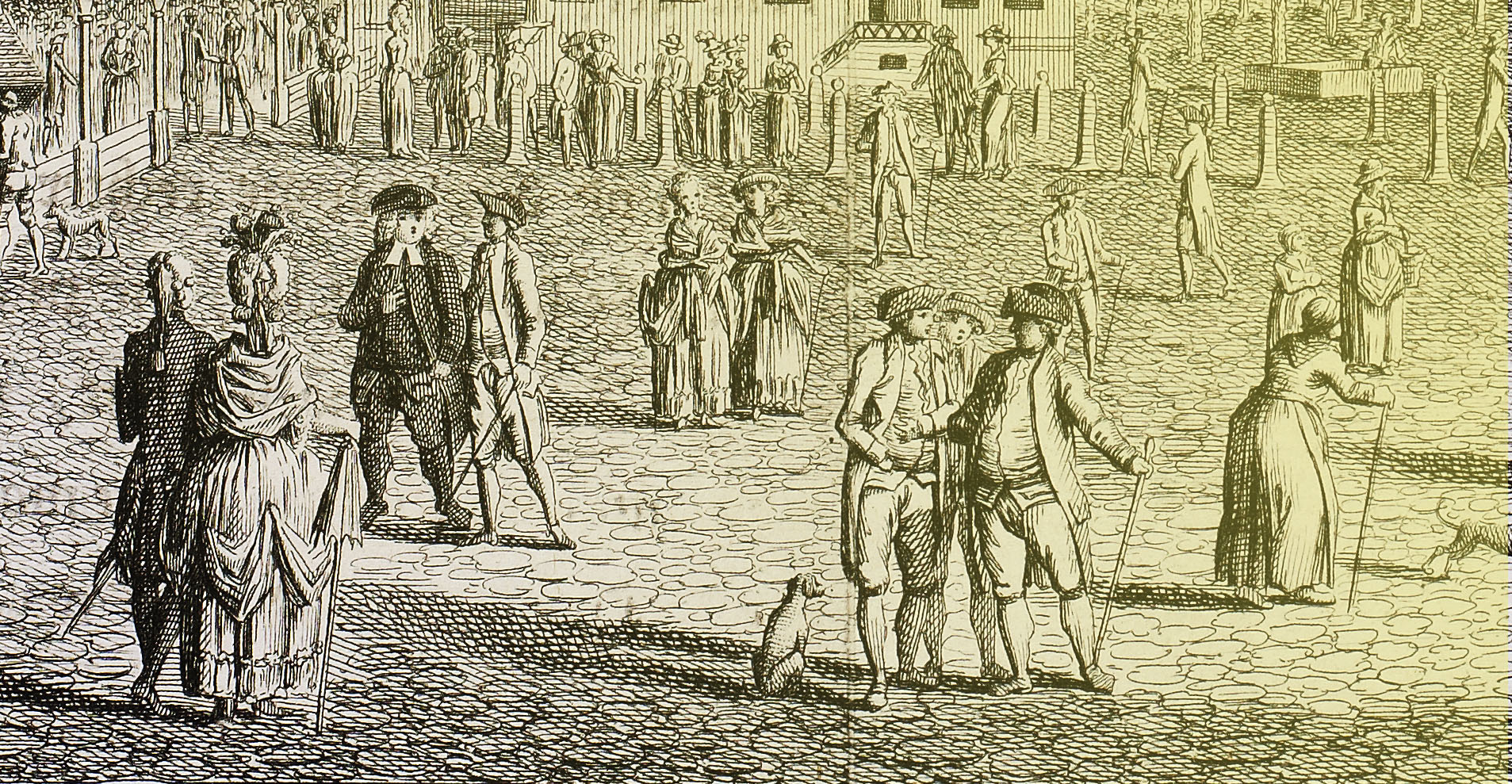
Den første artikel i dette efterårs udgave af Scandia handler om en dansk adelskvindes ageren i mødet med kurstedet Bad Pyrmonts internationale elite i årene omkring den franske revolution. I disse år blomstrede Europas kursteder, og den førende kurby var Bad Pyrmont, hvor den europæiske elite mødtes for at bade og ”tage kuren”. I dette blogindlæg vil jeg give et indblik i kurstedets indretning og den brøndkur, man kunne indtage her – og den selskabelighed, som gik...
Read More Read more about BLOGG: Kurophold og politisk selskabelighedIn memory of Sverker Oredsson (1937-2018)
av Ulf Zander
Lunds universitet och särskilt dess historiska institution låg Sverker Oredsson varmt om hjärtat. Han lämnade förvisso sitt alma mater i kölvattnet på att han 1969 disputerat på Järnvägarna och det allmänna. Svenska järnvägspolitik fram till 1890 till förmån för kommunpolitiken. Han återvände 1982 till Lunds universitet som universitetsdirektör. Åtta år därefter återkom han till Historiska institutionen.
Sverkers tjänstebeskrivning vid Historiska institutionen inkluderade inte handledning och undervisning, men förutom att leverera en strid ström av artiklar och böcker knöt han ofta och gärna kontakter med studenter och doktorander. Därtill tog han initiativet till att väcka Historiska föreningen ur dess mångåriga...
Read More Read more about Till minne: Tio år av utveckling - Sverker Oredsson och Scandia
Mirko Harmel reports from Greifswald and the conference on the study of antisemitism in Scandinavia.
Read More Read more about BLOG Report of the Conference “The Study of Antisemitism in Scandinavia –Where Are We Heading?” 5-7 February 2018 (Greifswald)
Bonnie Clementsson och Yvonne Maria Werner delar med sig av sina intryck av den stora konferensen ESSHC som i år hölls i Belfast.
Read More Read more about BLOGG European Social Science History conference (ESSHC) i Belfast 4-7 april 2018 – reflexioner och intryckLite Passé begav sig till Feministisk festival i Malmö för ett livesänt samtal med historikern Bolette Frydendahl Larsen om livet på danska uppfostringsanstalter för unga tjejer under 1900-talets första hälft. Varför ansågs flickorna i behov av vård och uppfostran och hur hanterade de mötet med dessa institutioner? Ett samtal om genus, historia och att vara på kant med samhällets förväntningar. Intervjun spelades in inför publik.
Read More Read more about PODD Lite passé: Samhället och de bråkiga flickornaLite Passé har träffat författaren Karin Bojs, som skrivit storsäljande böcker om människans historia med utgångspunkt i aktuell DNA-forskning och genetik. Hur kan naturvetenskapliga perspektiv bidra till historisk kunskap? Och vad är hemligheten bakom en riktigt läsvärd bok? Intervju från historikermötet i Sundsvall 2017.
Read More Read more about PODD Lite passé: Intervju med Karin BojsVilken roll spelar det hur vi klär oss? Vad kan kläder och berättelser om kläder säga oss om hur livet varit under tidigare epoker? Vi möter historikern Henric Bagerius för att tala om dräktreform, reformdräkter och moderevolutioner i detta sommaravsnitt av Lite passé som liksom tidigare avsnitt spelades in på svenska historikermötet i Sundsvall.
Read More Read more about PODD Lite passé: Mode, reform eller revolution?Lite Passé är tillbaka igen efter ett uppehåll. I detta avsnitt ger vi en liten uppdatering av läget och rapporterar från det svenska historikermötet 2017 som gick av stapeln i Sundsvall. Vilka trender kan vi se och vad håller historiker på med nuförtiden?
Read More Read more about PODD Lite passé: Nystart och historikermöteHur kan historiker använda spelfilm som en källa till det förflutna? Björn och Kristoffer talar med Ulrika Holgersson, docent i historia vid Lunds universitet, om hembiträden i svensk spelfilm under 1930- och 1940-talen. Vilka roller spelade de i "pilsnerfilmen" och vad säger de om samhällsförändringen vid denna tid? Ett samtal om kön, klass och film.
Read More Read more about PODD Lite passé: Pilsnerfilm och hembiträden
Dennis Magnusson
The blog discusses a forgotten chapter in Swedish film history, namely...
Louise Bundgaard, Kamilla Matthiassen, Fiona G. Otten, Anne Katrine H. Pedersen & Bo...
Camilla Olofsson Båatas, central handläggare för samiska frågor,...