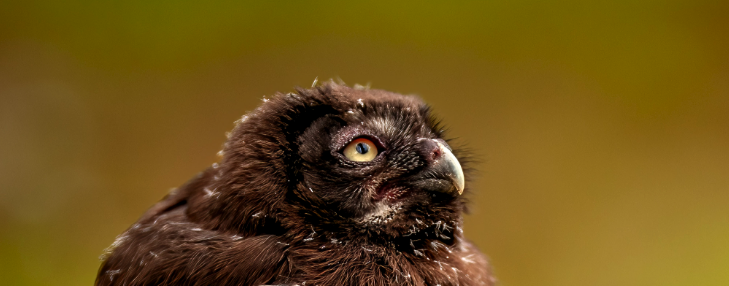
Habitatförändringars påverkan på talltitan Poecile montanus samt artens potential att åter häcka i Nationalstadsparken
DOI:
https://doi.org/10.34080/os.v36.27703Nyckelord:
skogsbruk, undervegetation, gallring, död ved, fragmentering, gammal skogAbstract
Forestry in Fennoscandia has led to a structural simplification of forest landscapes, altering the conditions for bird species living in this biotope. The willow tit Poecile montanus has undergone a dramatic decline in the area since the 1980s. This review compiles research investigating habitat-related factors that may have contributed to this decline. Environmental parameters found to affect the survival and breeding success are understory vegetation, dead wood availability, moisture levels, forest continuity, and the presence of old-growth forest. The combined lack of these habitat features is suggested to exacerbate population declines of willow tits, highlighting the necessity of targeted conservation efforts. The continuous availability of standing decaying wood is a fundamental requirement for nesting. Other key recommendations include reducing thinning intensity, maintaining continuous forest cover, protecting old-growth forests, and restoring moist forest areas. In addition to the review, I also present a case study of the National City Park in Stockholm, where no breeding pairs of willow tits have been recorded for at least 30 years. Thinning practices and the scarcity of suitable decaying wood may be contributing factors. Expanding thinning-free areas and retaining dead birch to ensure a continuous supply of nesting sites are proposed measures that could facilitate re-establishment.
Nedladdningar
Referenser
Angelstam P och Kuuluvainen T. 2004. Boreal forest disturbance regimes, successional dynamics and landscape structures: a European perspective. Ecological Bulletins 51: 117–136. https://www.jstor.org/stable/20113303.
Artdatabanken SLU. 2020. Red-listed species in Sweden 2020. Swedish University of Agricultural Sciences, Uppsala.
BirdLife Sverige. 2019. Sveriges fåglar 2019. Hur går det för Sveriges fåglar med särskilt fokus på läget i skogen? Rapport i samarbete med Svensk fågeltaxering vid Lunds Universitet och ArtDatabanken vid SLU. https://cdn.birdlife.se/wp-content/uploads/2020/01/Sveriges-f%C3%A5glar_2019_ld.pdf.
BirdLife Sverige. 2021. Sveriges fåglar 2021. Hur går det för Sveriges fåglar med särskilt fokus på läget i jordbrukslandskapet? Rapport i samarbete med Svensk fågeltaxering vid Lunds Universitet och ArtDatabanken vid SLU. https://cdn.birdlife.se/wp-content/uploads/2022/01/Sverigesfaglar_2021.pdf.
Brodin A och Clark C. 1997. Long-term hoarding in the Paridae: a dynamic model. Behavioral Ecology 8: 178–185. https://doi.org/10.1093/beheco/8.2.178.
Brodin A. 1994. The role of naturally stored food supplies in the winter diet of the boreal willow tit Parus montanus. Ornis Svecica 4: 31–40. https://doi.org/10.34080/os.v4.23030.
Brotons L, Desrochers A och Turcotte Y. 2001. Food hoarding behavior of black-capped chickadees (Poecile atricapillus) in relation to forest edges. Oikos 95: 511–519. https://doi.org/10.1034/j.1600-0706.2001.950316.x.
Chisholm SE och Leonard ML. 2008. Effect of forest management on a rare habitat specialist, the Bicknell’s thrush (Catharus bicknelli). Canadian Journal of Zoology 86: 217–223. https://doi.org/10.1139/Z07-131.
Cirule D, Krama T, Krams R, Elferts D, Kaasik A, Rantala MJ, Mierakuskas P, Luoto S och Krams IA. 2017. Habitat quality affects stress responses and survival in a bird wintering under extremely low ambient temperatures. Science of Nature 104: 99. https://doi.org/10.1007/s00114-017-1519-8.
Doherty PF och Grubb TC Jr. 2002. Survivorship of permanent-resident birds in a fragmented landscape. Ecology 83: 844–857. https://doi.org/10.1890/0012-9658(2002)083[0844:SOPRBI]2.0.CO;2.
Dolby AS och Grubb TC Jr. 1999. Effects of winter weather on horizontal and vertical use of isolated forest fragments by bark-foraging birds. Condor 101: 408–412. https://doi.org/10.2307/1370006.
Donovan TM och Flather CH. 2002. Relationships among North American songbird trends, habitat fragmentation and landscape occupancy. Ecological Applications 12: 364–374. https://doi.org/10.1890/1051-0761(2002)012[0364:RANAST]2.0.CO;2.
Eggers S och Low M. 2014. Differential demographic responses of sympatric Parids to vegetation management in boreal forest. Forest Ecology and Management 319: 169–175. https://doi.org/10.1016/j.foreco.2014.02.019.
Eggers S, Griesser M, Nystrand M och Ekman J. 2006. Predation risk induces changes in nest-site selection and clutch size in Siberian jays. Proceedings of the Royal Society B 273: 701–706. https://do i. org/10.1098/rspb.2005.3373.
Ekman J, Cederholm G och Askenmo C. 1981. Spacing and survival in winter groups of willow tit Parus montanus and crested tit P. cristatus – A removal study. Journal of Animal Ecology 50: 1–9. https://doi.org/10.2307/4027.
Ekman J. 1979. Coherence, composition and territories of winter social groups of the willow tit Parus montanus and the crested tit P. cristatus. Ornis Scandinavica 10: 56–68. https://doi.org/10.2307/3676345.
Ekman J. 1989. Ecology of non-breeding social systems of Parus. Wilson Bulletin 10: 263–288.
Ekman JB och Askenmo CEH. 1984. Social rank and habitat use in willow tit groups. Animal Behaviour 32: 508–514. https://doi.org/10.1016/S 0003-3472( 84)80288-2.
Ekman, J. 1986. Tree use and predator vulnerability of wintering passerines. Ornis Scandinavica 17: 261–267. https://doi.org/10.2307/3676836.
Esseen P-A, Ehnström B, Ericson L och Sjöberg K. 1997. Boreal forests. Ecological Bulletins 46: 16–47. https://www.jstor.org/stable/20113207.
Fraixedas S, Lindén A och Lehikoinen A. 2015. Population trends of common breeding forest birds in southern Finland are consistent with trends in forest management and climate change. Ornis Fennica 92: 187–203. https://doi.org/10.51812/of.133879.
Gauthier S, Bernier P, Kuuluvainen T, Shvidenko AZ och Schepaschenko DG. 2015. Boreal forest health and global change. Science 349: 819–822. https://doi.org/10.1126/science.aaa 9092.
Green M, Haas F och Lindström Å. 2019. Monitoring population changes of birds in Sweden. Annual report for 2018. Department of Biology, Lund University.
Green M, Haas F och Lindström Å. 2022. Monitoring population changes of birds in Sweden. Annual report for 2021. Department of Biology, Lund University.
Green M, Haas F, Lindström Å och Nilsson, L. 2021. Monitoring population changes of birds in Sweden. Annual report for 2020. Department of Biology, Lund University.
Griesser M och Nystrand M. 2009. Vigilance and predation of a forest-living bird species depend on large-scale habitat structure. Behavioral Ecology 20: 709–715. https://doi.org/10.1093/b eheco/arp045.
Griesser M, Nystrand M och Ekman J. 2006. Reduced mortality selects for family cohesion in a social species. Proceedings of the Royal Society B 273: 1881–1886. https://do i-org .ezp. sub.s u.se/10.1098/rs pb.2006.3527.
Griesser M, Nystrand M, Eggers S och Ekman J. 2007. Impact of forestry practices on fitness correlates and population productivity in an open-nesting bird species. Conservation Biology 21: 767–774. https://doi.org/10.1111/j.1523-1739.2007.00675.x.
Haapanen A. 1965. Bird fauna of the Finnish forests in relation to forest succession I. Annales Zoologici Fennici 2: 153–196. https://www.jstor.org/stable/23730722.
Haapanen A. 1966. Bird fauna of the Finnish forests in relation to forest succession II. Annales Zoologici Fennici 3: 176–200. https://www.jstor.org/stable/23731276.
Haftorn S. 1959. The proportion of spruce seeds removed by the tits in a Norwegian spruce forest in 1954–1955. Det Kongelige Norske Videnskabers Selskab 32: 121–125.
Haftorn S. 1999. Flock formation, flock size and flock persistence in the willow tit Parus montanus. Ornis Fennica 76: 49–63. https://ornisfennica.journal.fi/article/view/133498.
Hamilton H. 1982. Praktisk Skogshandbok. Sveriges skogsvårdsförbund. Föreningen Skogen, Stockholm.
Hanski I. 2005. The shrinking world: Ecological consequences of habitat loss. International Ecology Institute. https://doi.org/10.1086/503991.
Hansson L. 1992. Landscape ecology of boreal forests. Trends in Ecology och Evolution 7: 299–302. https://doi.org/10.1016/0169-5347(92)90227-3.
Helle P och Järvinen O. 1986. Population trends of North Finnish land birds in relation to their habitat selection and changes in forest structure. Oikos 46: 107–115. https://doi.org/10.2307/3565386.
Helle P och Muona J. 1985. Invertebrate numbers in edges between clear-felling and mature forests in northern Finland. Silva Fennica 19: 281–294. https://doi.org/10.14214/sf.a15424.
Helle P. 1985. Effects of forest regeneration on the structure of bird communities in northern Finland. Holarctic Ecology 8: 120–132. https://doi.org/10.1111/j.1600-0587.1985.tb01162.x.
Hinsley SA, Roherty P och Bellamy PE. 1999. Influence of woodland area on breeding success in great tits Parus major and blue tits Parus caeruleus. Journal of Avian Biology 30: 271–281. https://doi.org/10.2307/3677353.
Huhta E och Jokimäki J. 2001. Breeding occupancy and success of two hole nesting passerines: the impact of fragmentation caused by forestry. Ecography 24: 431–444. https://doi.org/10.1034/j.1600-0587.2001.d01-199.x.
Imbeau L, Mönkkönen M och Desrochers A. 2001. Long-term effects of forestry on birds of the eastern Canadian boreal forests: a comparison with Fennoscandia. Conservation Biology 15: 1151–1162. https://doi.org/10.1046/j.1523-1739.2001.0150041151.x.
Jalas J (ed). 1958. Suuri kasivikirja 1. Otava, Helsinki, Finland
Jansson C, Ekman J och von Brömssen A. 1981. Winter mortality and food supply in tit Parus spp. Oikos 37: 313–322. https://doi.org/10.2307/3544122.
Jokimäki J och Huhta E. 1996. Effects of landscape matrix and habitat structure on a bird community in northern Finland: a multi-scale approach. Ornis Fennica 73: 97–113. https://www.researchgate.net/publication/264829329_Effects_of_landscape_matrix_and_habitat_structure_on_a_bird_community_in_northern_Finland.
Jokimäki J och Solonen T. 2011. Habitat associations of old forest bird species in managed boreal forests characterized by forest inventory data. Ornis Fennica 88: 57–70. https://doi.org/10.51812/of.133763.
Jokimäki J, Huhta E, Itämies J och Rahko P. 1998. Distribution of arthropods in relation to forest patch size, edge and stand characteristics. Canadian Journal of Forest Research 28: 1068–1072. https://doi.org/10.1139/cjfr-28-7-1068.
Klein J, Haverkamp PJ, Lindberg E, Griesser M och Eggers S. 2020a. Remotely sensed forest understory density and nest predator occurrence interact to predict suitable breeding habitat and the occurrence of a resident boreal bird species. Ecology and Evolution 10: 2238–2252. https://doi.org/10.1002/ece3.6062.
Klein J, Low M, Sjögren J och Eggers S. 2022. Short-term experimental support for bird diversity retention measures during thinning in European boreal forests. Forest Ecology and Management 509: 120084. https://doi.org/10.1016/j.foreco.2022.120084.
Klein J, Thor G, Low M, Sjögren J, Lindberg E och Eggers S. 2020b. What is good for birds is not always good for lichens: interactions between forest structure and species richness in managed boreal forests. Forest Ecology and Management 473: 118327. https://doi.org/10.1016/j.foreco.2020.118327.
Kouki J och Väänänen A. 2000. Impoverishment of resident old-growth forest bird assemblages along an isolation gradient of protected areas in eastern Finland. Ornis Fennica 77: 145–154. https://ornisfennica.journal.fi/article/view/133537.
Kouki J, Löfman S, Martikainen P, Rouvinen S och Uotila A. 2001. Forest fragmentation in Fennoscandia: linking habitat requirement of wood associated threatened species to landscape and habitat changes. Scandinavian Journal of Forest Research 3: 27–37. https://doi.org/10.1080/028275801300090564.
Krams I, Cīrule D, Krama T, Hukkanen M, Rytkönen S, Orell M, Iezhova T, Rantala MJ och Tummeleht L. 2010b. Effect of forest management on haematological parameters, blood parasites, and reproductive success of the Siberian tit Poecile cinctus in northern Finland. Annales Zoologici Fennici 47: 335–346. https://doi.org/10.5735/086.047.0504.
Krams I, Cīrule D, Suraka V, Krama T, Rantala MJ och Ramey G. 2010a. Fattening strategies of wintering great tits support the optimal body mass hypothesis under conditions of extremely low ambient temperature. Functional Ecology 24: 172–177. https://doi.org/10.1111/j.1365-2435.2009.01628.x.
Kullberg C och Ekman J. 2000. Does predation maintain tit community diversity? Oikos 89: 41–45. https://doi.org/10.1034/j.1600-0706.2000.890105.x.
Kumpula S, Vatka E, Orell M och Rytkönen S. 2023. Effects of forest management on the spatial distribution of the willow tit (Poecile montanus). Forest Ecology and Management 529: 120694. https://doi.org/10.1016/j.foreco.2022.120694.
Kungliga Djurgårdsförvaltningen. 2003. Skötselplan för Nationalstadsparken i Stockholm, Solna och Lidingö kommuner. Kungliga Djurgårdsförvaltningen, Stockholm. https://www.ekoparken.org/Medlemssidor/kdf/splan%20NSP%203%20nov%20del%20I.pdf.
Lampila P, Mönkkönen M och Desrochers A. 2005. Demographic responses by birds to forest fragmentation. Conservation Biology 19: 1537–1546. https://doi.org/10.1111/j.1523-1739.2005.00201.x.
Lewis AJG, Amar A, Cordi-Piec D och Thewlis RM. 2007. Factors influencing willow tit Poecile montanus site occupancy: a comparison of abandoned and occupied woods. Ibis 149: 205–213. https://doi.org/10.1111/j.1474-919X.2007.00733.x.
Li P och Martin TE. 1991. Nest-site selection and nesting success of cavity-nesting birds in high elevation forest drainages. Auk 108: 405–418. https://digitalcommons.usf.edu/auk/vol108/iss2/22.
Lindberg E, Roberge JM, Johansson T och Hjältén J. 2015. Can airborne laser scanning (ALS) and forest estimates derived from satellite images be used to predict abundance and species richness of birds and beetles in boreal forest? Remote Sensing 7: 4233–4252. https://doi.org/10.3390/rs70404233.
Lindbladh M, Hedwall PO, Holmström E, Petersson L och Felton A. 2020. How generalist are these forest specialists? What Sweden’s avian indicators indicate. Animal Conservation 23: 762–773. https://doi.org/10.1111/acv.12595.
Linder P och Östlund L. 1998. Structural changes in three mid-boreal Swedish forest landscapes, 1885–1996. Biological Conservation 85: 9–19. https://doi.org/10.1016/S0006-3207(97)00168-7.
Länsstyrelsen. 2012. Vård-och Utvecklingsplan för Kungliga Nationalstadsparken. Rapport 2012:33. Länsstyrelsen i Stockholms län. https://www.lansstyrelsen.se/stockholm/om-oss/vara-tjanster/publikationer/2012/vard--och-utvecklingsplan-for-kungliga-nationalstadsparken.html.
Manuwal DA och Huff MH. 1987. Spring and winter bird populations in a Douglas-fir forest. Journal of Wildlife Management 51: 586–595. https://doi.org/10.2307/3801273.
Matthysen E. 1990. Nonbreeding social organization in Parus. Pp. 209–249 in Current ornithology 7 (Power DM, ed). Plenum Press, New York.
MB Miljöbalken 4kap 7§ 1998:808, med tillägg i Nationalstadsparksförordningen 2009:55. https://www.riksdagen.se/sv/dokument-och-lagar/dokument/svensk-forfattningssamling/nationalstadsparksforordning-200955_sfs-2009-55/.
Merikallio E. 1958. Finnish birds. Their distribution and numbers. Fauna Fennica 5: 1–181.
Müller J, Stadler J och Brandl R. 2010. Composition versus physiognomy of vegetation as predictors of bird assemblages: the role of lidar. Remote Sensing of Environment 114: 490–495. https://doi.org/10.1016/j.rse.2009.10.006.
Mänd R, Tilgar V, Löhmus A och Leivits A. 2005. Providing nest boxes for hole-nesting birds – does habitat matter? Biodiversity and Conservation 14: 1823–1840. https://doi.org/10.1007/s10531-004-1039-7.
Møller AP, Erritzoe J och Nielsen JT. 2009. Frequency of fault bars in feathers of birds and susceptibility to predation. Biological Journal of the Linnean Society 97: 334–345. https://doi.org/10.1111/j.1095-8312.2009.01204.x.
Norris K och Harper N. 2004. Extinction processes in hotspots of avian biodiversity and the targeting of pre-emptive conservation action. Proceedings of the Royal Society B, 271: 123–130. https://doi.org/10.1098/rspb.2003.2576.
Orell M och Ojanen M. 1983. Breeding biology and population dynamics of the willow tit Parus montanus. Annales Zoologici Fennici 20: 99–114. https://www.sekj.org/PDF/anzf20/anzf20-099-114.pdf.
Ottosson U, Ottvall R, Elmberg J, Green M, Gustafsson R, Haas F, Holmqvist N, Lindström Å Nilsson L, Svensson M, Svensson S och Tjernberg M. 2012. Fåglarna i Sverige – Antal och förekomst. Sveriges Ornitologiska Förening.
Palmgren P. 1930. Quantitative Untersuchungen über die Vogelfauna in den Wäldern Südfinnlands mit besonderer Berücksichtigung Ålands. Acta Zoologica Fennica 7: 1–218.
Pan-European Common Bird Monitoring Scheme. 2025. The state of Europe’s wild birds 2025. CSO. Prague, Czech Republic. https://pecbms.info/trends-of-wild-birds-in-europe-2025-update/.
Pettersson RB, Ball JP, Renhorn KE, Esseen PA och Sjöberg K. 1995. Invertebrate communities in boreal forest canopies as influenced by forestry and lichens with implications for passerine birds. Biological Conservation 74: 57–63. https://doi.org/10.1016/0006-3207(95)00015-V.
Ram D, Axelsson A-L, Green M, Smith H G och Lindström Å. 2017. What drives current population trends in forest birds – Forest quantity, quality or climate? A large-scale analysis from northern Europe. Forest Ecology and Management 385: 177–188. https://doi.org/10.1016/j.foreco.2016.11.013.
Region Stockholm. 2018. Regional Utvecklingsplan för Stockholmsregionen. RUFS 2050. Rapport 2018:10. https://www.regionstockholm.se/495d1e/siteassets/om-region-stockholm/om-region-stockholm/styrande-dokument/regional-utveckling/regional-utvecklingsplan-for-stockholm-rufs-2050.pdf.
Roberge J-M, Angelstam P och Villard M. 2008. Specialised woodpeckers and naturalness in hemiboreal forests – deriving quantitative targets for conservation planning. Biological Conservation 141: 997–1012. https://doi.org/10.1016/j.biocon.2008.01.010.
Robinson SK, Thompson FR, Donovan, TM, Whitehead DR och Faaborg J. 1995. Regional forest fragmentation and the nesting success of migratory birds. Science 267: 1987–1990. https://doi.org/10.1126/science.267.5206.1987.
Rodríguez A, Andrén H och Jansson G. 2001. Habitat-mediated predation risk and decision making of small birds at forest edges. Oikos 95: 383–396. https://doi.org/10.1034/j.1600-0706.2001.950303.x.
Romero LM och Wikelski M. 2001. Corticosterone levels predict survival probabilities of Galápagos marine iguanas during el Ninõ events. Proceedings of the National Academy of Sciences 98: 7366–7370. https://doi.org/10.1073/pnas.131091498.
Sala OE, Chapin FS, Armesto JJ, Berlow E, Bloomfield J, Dirzo R, Huber-Sanwald E, Huenneke LF, Jackson RB, Kinzig A, Leemans R, Lodge DM, Mooney HA, Oesterheld M, Poff NL, Sykes MT, Walker BH, Walker M och Wall DH. 2000. Global biodiversity scenarios for the year 2100. Science 287: 1770–1774. https://doi.org/10.1126/science.287.5459.1770.
Siffczyk C, Brotons L, Kangas K och Orell M. 2003. Home range size of willow tits: a response to winter habitat loss. Oecologica 136: 135–142. https://doi.org/10.1007/s 00442-003-1256-x.
Snow DW och Perrins CM. 1998. The birds of the Western Palearctic. Concise edition. Oxford University Press, Oxford.
Stockholms läns landsting. 2010. Regional Utvecklingsplan för Stockholmsregionen 2010. Dnr 003-1333/2010.
Suhonen J. 1993. Predation risk influences the use of foraging sites by tits. Ecology 74: 1197–1203. https://doi.org/10.2307/1940490.
Suorsa P, Huhta E, Nikula A, Nikinmaa M, Jäntti A, Helle H och Hakkarainen H. 2003. Forest management is associated with physiological stress in an old-growth forest passerine. Proceedings of the Royal Society B 270: 963–969. https://doi.org/10.1098/rspb.2002.2326.
Thompson ID, Baker JA och Ter-Mikaelian M. 2003. A review of the long-term effects of post-harvest silviculture on vertebrate wildlife, and predictive models, with an emphasis on boreal forests in Ontario, Canada. Forest Ecology and Management 177: 441–469. https://doi.org/10.1016/S0378-1127(02)00453-X.
Ulfstrand S och Högstedt G. 1976. Hur många fåglar häckar i Sverige? Anser 15: 1–32.
Vatka E, Kangas K, Orell M, Lampila S, Nikula A och Nivala V. 2014. Nest site selection of a primary hole-nesting passerine reveals means to developing sustainable forestry. Journal of Avian Biology 45: 187–196. https://doi.org/10.1111/j.1600-048X.2013.00250.x.
Villard MA, Trzcinski MK och Merriam G. 1999. Fragmentation effects on forest birds: relative influence of woodland cover and configuration on landscape occupancy. Conservation Biology 13: 774–783. https://doi.org/10.1046/j.1523-1739.1999.98059.x.
Virkkala R, Rajasärkkä A, Väisänen RA, Vickholm M och Virolainen E. 1994. Conservation value of nature reserves: do hole-nesting birds prefer protected areas in southern Finland? Annales Zoologici Fennici 31: 173–186. https://www.sekj.org/PDF/anzf31/anz31-173-186.pdf.
Virkkala R. 1987. Effects of forest management on birds breeding in northern Finland. Annales Zoologici Fennici 24: 281–294. https://www.jstor.org/stable/23734475.
Virkkala R. 1991. Population trends of forest birds in a Finnish Lapland landscape of large habitat blocks: consequences of stochastic environmental variation or regional habitat alteration? Biological Conservation 56: 223–240. https://doi.org/10.1016/0006-3207(91)90019-6.
Virkkala R. 2016. Long-term decline of southern boreal forest birds: consequence of habitat alteration or climate change? Biodiversity and Conservation 25: 151–167. https://doi.org/10.1007/s10531-015-1043-0.
Väisänen RA, Lammi E och Koskimies P. 1998. Distribution, numbers and population changes of Finnish breeding birds. Otava, Helsinki, Finland.
Wachob DG. 1996. The effect of thermal microclimate on foraging site selection by wintering mountain chickadees. Condor 98: 114–122. https://sora.unm.edu/sites/default/files/journals/condor/v098n01/p0114-p0122.pdf.
Waldenström H. 2022a. Trevliga highlights under årets inventering i Nationalstadsparken. Fåglar i Stockholmstrakten 2022: 38–41. Stockholms Ornitologiska Förening.
Waldenström H. 2022b. Fågelinventering av Kungliga nationalstadsparken 2021– Sammanställning av inventeringar. Rapport, Stockholms Ornitologiska Förening. https://stof.nu/wp-content/uploads/2022/06/RAPPORT-inventering-av-fa%CC%8Aglar-i-Nationalstadsparken-2021-rev-2022-05-28.pdf.
Witter MS och Lee SJ. 1995. Habitat structure, stress and plumage development. Proceedings of the Royal Society B 261: 303–308. https://doi.org/10.1098/rspb.1995.0151.

Downloads
Publicerad
Referera så här
Nummer
Sektion
Licens
Copyright (c) 2026 Caroline Kling

Det här verket är licensierat under en Creative Commons Erkännande 4.0 Internationell-licens.
Författaren/författarna innehar copyright för varje enskilt bidrag, men samtliga bidrag är publicerade under en Creative Commons-licens, så att vem som helst kan dela och återanvända bidraget förutsatt att copyright-innehavaren erkänns.