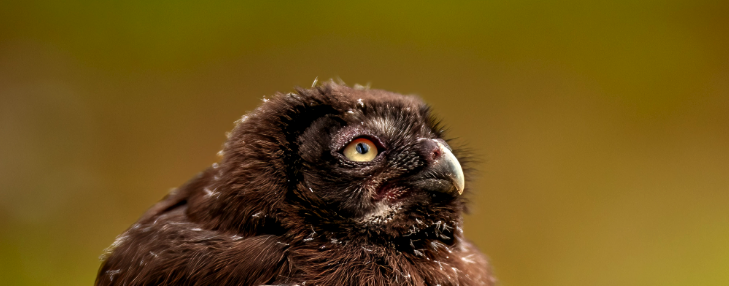
Ringing data reveal a significant decline in first-year willow warblers Phylloscopus trochilus at Gotland, Sweden—an effect of climate change?
DOI:
https://doi.org/10.34080/os.v36.27532Keywords:
population trend, offspring production, breeding success, increasing temperatureAbstract
One of the most widespread passerines breeding in Europe, the willow warbler Phylloscopus trochilus, has declined considerably. Here, we analyse the production of offspring in the southern subspecies of willow warbler at Gotland, Sweden, by utilizing data on post-juvenile moult of first-year birds from standardized ringing during 1990–2024, and comparing our findings with meteorological data. The number of first-year birds ringed in postjuvenile moult stage 0–4, which means that they are hatched in the vicinity, varied greatly, with an annual average of 317 (range 50–591) individuals and a significant negative trend over time. During 1990–2006, the number was relatively stable at 431 ± 85 (SD), followed by decreasing numbers and higher variation 2007–2024. Compared to 1990–2006, the number of ringed first-year willow warblers in moult stage 0–4 decreased by 74 % (112 ± 44) from 2016 onwards, and was negatively related to temperature during the incubation and the nestling period, but not during the fledgling period. There was no significant relationship between precipitation and the number of birds ringed. We discuss the results with respect to increased temperature during breeding, following climate change, involving negative effects on offspring productivity.
Downloads
References
Arvidson BE & Nilsson L. 1983. Breeding biology of Willow Warbler Phylloscopus trochilus, in Swedish Lapland. Vår Fågelvärld 42: 81–88. (Swedish with English summary.)
Bellamy P E, Hill R A, Rothery P, Hinsley S A, Fuller R J & Broughton R K. 2009. Willow Warbler Phylloscopus trochilus habitat in woods with different structure and management in southern England. Bird Study 56: 338–348. https://doi.org/10.1080/00063650902806914.
Bensch S & Lindström Å. 1992. The age of young Willow Warblers Phylloscopus trochilus estimated from different stages of post-juvenile moult. Ornis Svecica 2: 23–28. https://doi.org/10.34080/os.v2.23081.
BirdLife International. 2024. Species factsheet: Willow Warbler Phylloscopus trochilus. Downloaded from https://datazone.birdlife.org/species/factsheet/willow-warbler-phylloscopus-trochilus on 30 September 2024.
Both C, Bouwhuis S, Lessells C M & Visser M E. 2006. Climate change and population declines in a long-distance migratory bird. Nature 441: 81–83. https://doi.org/10.1038/nature04539.
Cotton PA. 2003. Avian migration phenology and global climate change. Proceedings of the National Academy of Sciences 100: 12219–12222. https://doi.org/10.1073/pnas.1930548100.
European Environment Agency, 26 June 2024. Global and European temperatures. https://www.eea.europa.eu/en/analysis/indicators/global-and-european-temperatures?activeAccordion=ecdb3bcf-bbe9-4978-b5cf-0b136399d9f8.
Green M, Haas F & Lindström Å. 2024. Monitoring population changes of birds in Sweden. Annual report for 2023. Department of Biology, Lund University. 80 pp. https://portal.research.lu.se/en/publications/%C3%B6vervakning-av-f%C3%A5glarnas-populationsutveckling-%C3%A5rsrapport-f%C3%B6r-202-4/.
Fransson T & Hall-Karlsson S. 2008. Svensk ringmärkningsatlas. Volym 3, tättingar. Swedish Museum of Natural History, Stockholm.
Fransson T, Belivanov Y, Henshaw I & Steinholtz Å. 2024. Svensk ringmärkning 2023. In: Fågelåret 2023. Vår Fågelvärld supplement 64: 23–36. (In Swedish.)
Davison CW, Rahbek C & Morueta-Holme N. 2024. Changes in Danish bird communities over four decades of climate and land-use change. Oikos 2024: e10697. https://doi.org/10.1111/oik.10697.
Dawson A. 2005. The effect of temperature on photoperiodically regulated gonadal maturation, regression and moult in starlings—potential consequences of climate change. Functional Ecology 19: 995–1000. https://doi.org/10.1111/j.1365-2435.2005.01061.x.
Hanmer HJ, Boersch-Supan PH & Robinson RA. 2022. Differential changes in life cycle-event phenology provide a window into regional population declines. Biology Letters 18: 20220186. https://doi.org/10.1098/rsbl.2022.0186.
Hedenström A & Pettersson J. 1987. Migration routes and wintering areas of Willow Warblers Phylloscopus trochilus (L.) ringed in Fennoscandia. Ornis Fennica 64: 137–143. https://ornisfennica.journal.fi/article/view/133244.
Hedlund JSU, Jakobsson S, Kullberg C & Fransson T. 2015. Long-term phenological shifts and intra-specifi c differences in migratory change in the willow warbler Phylloscopus trochilus. Journal of Avian Biology 45: 001–010. https://doi.org/10.1111/jav.00484.
Hedlund J, Fransson T, Kullberg C, Persson J-O & Jakobsson S. 2022. Increase in protrandry over time in a long-distance migratory bird. Ecology and Evolution 12: e9037. https://doi.org/10.1002/ece3.9037.
Heldbjerg H & Fox AD. 2008. Long-term population declines in Danish trans-Saharan migrant birds. Bird Study 55: 267–279. https://doi.org/10.1080/00063650809461532.
Hällfors MH, Antão LH, Itter M, Lehikoinen A, Lindholm T, Roslin T & Saastamoinen M. 2020. Shifts in timing and duration of breeding for 73 boreal bird species over four decades. Proceedings of the National Academy of Sciences 117: 18557–18565. https://doi/10.1073/pnas.1913579117.
Hellström M, Andersson A, Pedersen J, Waldenström J & Lindström Å. 2024. Fågelräkning och ringmärkning vid Ottenby 2023. Rapport, Ottenby fågelstation. 49 pp. https://cdn.birdlife.se/wp-content/uploads/sites/35/2024/04/Arsrapport-2023-Ottenby-fagelstation.pdf.
Hemborg C & Lundberg A. 1998. Costs of overlapping reproduction and moult in passerine birds: an experiment with the pied flycatcher. Behavioral Ecology and Sociobiology 43: 19–23. https://doi.org/10.1007/s002650050462.
IPCC (Intergovernmental Panel on Climate Change). 2021. Climate Change 2021: The Physical Science Basis. Contribution of Working Group I to the Sixth Assessment Report of the Intergovernmental Panel on Climate Change. (Masson-Delmotte V, Zhai P, Pirani A, Connors SL, Péan C, Berger S, Caud N, Chen Y, Goldfarb L, Gomis MI, Huang M, Leitzell K, Lonnoy E, Matthews JBR, Maycock TK, Waterfield T, Yelekçi O, Yu R & Zhou B, eds.) Cambridge University Press, Cambridge, UK, and New York, NY, USA. 2391 pp. https://doi.org/10.1017/9781009157896.
Janes T, Jones R & Hartley A. 2015. Regional Climate Projections for West Africa. UNEP-WCM Technical Report. UNEP-WCMC, Cambridge, UK. http://parcc.protectedplanet.net/system/comfy/cms/files/files/000/000/039/original/PARCC_climate_report_FINAL_EN.pdf.
Lawn MR. 1984. Premigratory dispersal of juvenile Willow Warblers Phylloscopus trochilus in southern England. Ringing & Migration 5: 125–131. https://doi.org/10.1080/03078698.1984.9673842.
Lindström Å, Hedenström A, & Pettersson J. 1996. The autumn migration of Willow Warblers Phylloscopus trochilus in Sweden: results from a nation-wide co-operative project. Ornis Svecica 6: 145–172. https://doi.org/10.34080/os.v6.22980.
Lomas Vega M, Fransson T & Kullberg C. 2021. The effects of four decades of climate change on the breeding ecology of an avian sentinel species across a 1,500-km latitudinal gradient are stronger at high latitudes. Ecology and Evolution 11: 6233–6247. https://doi.org/10.1002/ece3.7459.
Lerche-Jørgensen M, Willemoes M, Tøttrup AP, Scotchburn Snell K R & Thorup K. 2017. No apparent gain from continuing migration for more than 3000 kilometres: willow warblers breeding in Denmark winter across the entire northern Savannah as revealed by geolocators. Movement Ecology 5: 17. https://doi.org/10.1186/s40462-017-0109-x.
Martay B, Brewer M J, Elston D A, Bell J R, Harrington R, Brereton T M, Barlow K E, Botham M S & Pearce-Higgins J W. 2017. Impacts of climate change on national biodiversity population trends. Ecography 40: 1139–1151. https://doi.org/10.1111/ecog.02411.
Morrison CA, Robinson RA, Butler SJ, Clark JA & Gill JA. 2016. Demographic drivers of decline and recovery in an Afro-Palaearctic migratory bird population. Proceedings of the Royal Society B 283: 20161387. https://doi.org/10.1098/rspb.2016.1387.
Møller AP, Rubolini D & Lehikoinen E. 2008. Populations of migratory bird species that did not show a phenological response to climate change are declining. Proceedings of the National Academy of Sciences 105: 16195–16200. https://doi.org/10.1073/pnas.0803825105.
Niang I, Ruppel O C, Abdrabo M A, Essel A, Lennard C, Padgham J & Urquhart P. 2014. Africa. Pp 1199–1265 in Climate Change 2014: Impacts, Adaptation and Vulnerability. Part B: Regional Aspects. Contribution of Working Group II to the Fifth Assessment Report of the Intergovernmental Panel on Climate Change (Barros VR, Field CB, Dokken DJ, Mastrandrea MD, Mach KJ, Bilir TE, Chatterjee M, Ebi KL, Estrada YO, Genova RC, Girma B, Kissel ES, Levy AN, MacCracken S, Mastrandrea PR & White LL, eds). Cambridge University Press, Cambridge, UK, and New York, NY, USA. https://www.ipcc.ch/report/ar5/wg2/.
Ockendon N, Hewson CM, Johnston A & Atkinson PW. 2012. Declines in British breeding populations of Afro-Palaearctic migrant birds are linked to bioclimatic wintering zone in Africa, possibly via constraints on arrival time advancement, Bird Study 59: 111–125. https://doi.org/10.1080/00063657.2011.645798.
Ottosson U, Ottvall R, Green M, Gustafsson R, Haas F, Holmqvist N, Lindström Å, Nilsson L, Svensson M, Svensson S & Tjernberg M. 2012. Fåglarna i Sverige: antal och förekomst. Sveriges Ornitologiska Förening. (In Swedish.)
Peach W J, Buckland S T & Baillie S R. 1996. The use of constant effort mist-netting to measure between-year changes in the abundance and productivity of common passerines. Bird Study 43: 142–156. https://doi.org/10.1080/00063659609461007.
PECBMS. 2025. EBCC/BirdLife/RSPB/CSO’ Pan-European Common Bird Monitoring Scheme. https://pecbms.info/ (accessed 10 January 2025).
Pettersson J & Hasselquist D. 1985. Fat deposition and migration capacity of robins Erithacus rubecula and goldcrests Regulus regulus at Ottenby, Sweden. Ringing & Migration 6: 66–76. https://doi.org/10.1080/03078698.1985.9673859.
Phillimore AB, Leech DI, Pearce-Higgins JW & Hadfield JD. 2016. Passerines may be sufficiently plastic to track temperature-mediated shifts in optimum lay date. Global Change Biology 22: 3259–3272. https://doi.org/10.1111/gcb.13302.
Pratt A & Peach W. 1991. Site tenacity and annual survival of a Willow Warbler Phylloscopus trochilus population in Southern England. Ringing & Migration 12: 128–134. https://doi.org/10.1080/03078698.1991.9674005.
Sala OE, Chapin FS, Armesto JJ, Berlow E, Bloomfield J, Dirzo R, Huber-Sanwald E, Huenneke LF, Jackson RB, Kinzig A, Leemans R, Lodge DM, Mooney HA, Oesterheld M, Poff LN, Sykes MT, Walker BH, Walker M & Wall DH. 2000. Global Biodiversity Scenarios for the Year 2100. Science 287: 1770–1774. https://doi.org/10.1126/science.287.5459.1770.
Salewski V, Falk KH, Bairlein F & Leisler B. 2002. Numbers, body mass and fat scores of three Palearctic migrants at constant effort mist netting site in Ivory Coast, West Africa. Ardea 90: 479–486.
Sanderson FJ, Donald PF, Pain DJ, Burfield IJ & van Bommel FPJ. 2006. Long-term population declines in Afro-Palaearctic migrant birds. Biological Conservation 131: 93–105. https://doi.org/10.1016/j.biocon.2006.02.008.
Swedish Meteorological and Hydrological Institute (SMHI). 2024. https://www.smhi.se/data/meteorologi/ladda-ner-meteorologiska-observationer/airtemperatureMean24h/68560 (accessed 24 October 2024).
Svensson L. 2023. Identification guide to European passerines. Fifth edition. Lullula Förlag, Stockholm.
Svensson E & Nilsson J-Å. 1997. The trade-off between molt and parental care: a sexual conflict in the blue tit? Behavioral Ecology 8: 92–98. https://doi.org/10.1093/beheco/8.1.92.
Telenský T, Klvaňa P, Jelínek M, Cepák J & Reif J. 2020. The influence of climate variability on demographic rates of avian Afro-palearctic migrants. Scientific Reports 10: 17592. https://doi.org/10.1038/s41598-020-74658-w.
Vickery JA, Ewing SR, Smith KW, Pain DJ, Bairlein F, Škorpilová J & Gregory RD. 2014. The decline of Afro-Palaearctic migrants and an assessment of potential causes. Ibis 156: 1–22. https://doi.org/10.1111/ibi.12118.
Youngflesh C, Montgomery GA, Saracco JF, Miller DAW, Guralnick RP, Hurlbert AH, Siegel RB, LaFrance R & Tingley MW. 2023. Demographic consequences of phenological asynchrony for North American songbirds. Proceedings of the National Academy of Sciences 120: e2221961120. https://doi.org/10.1073/pnas.2221961120.

Downloads
Published
Issue
Section
License
Copyright (c) 2026 Anders Nissling, Åsa Steinholtz, Thord Fransson

This work is licensed under a Creative Commons Attribution 4.0 International License.
The copyright of each contribution belongs to the author(s), but all contributions are published under a Creative Commons license, so that anyone is free to share and reuse the contribution as long as the copyright holder is attributed.